

Wildlife trafficking in France: a generation already at work

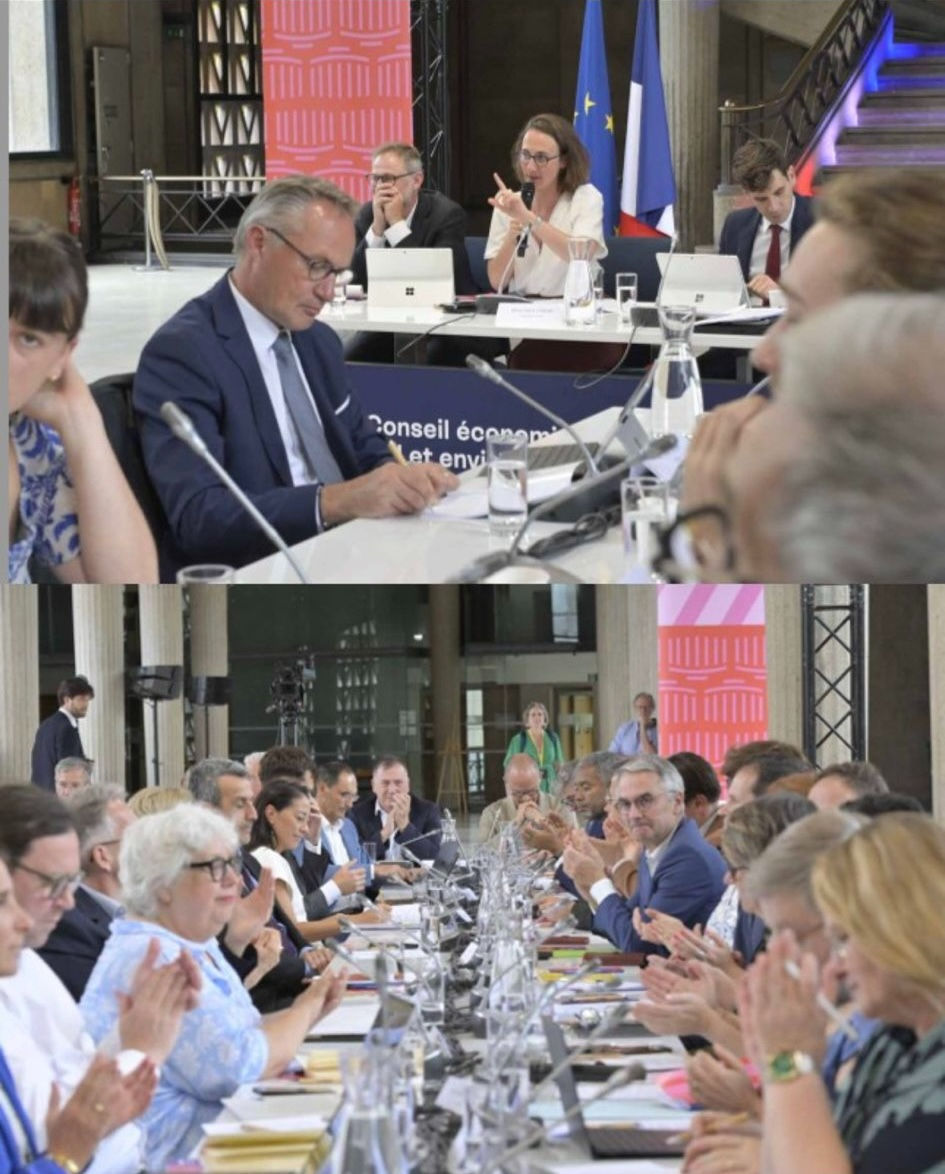
On 9 July 2026, Beauval Zoo hosted a symposium titled "Wildlife Trafficking: Assessment & Perspectives," convened by the French Association of Zoological Parks (AFdPZ) and the French Committee of IUCN, together with its member and expert organisations. The event marked three years since the French Committee published its 25 reference recommendations on wildlife trafficking and organised crime (2022) — an occasion to take an honest measure of progress and to shape the next steps.
For an international IUCN audience, one detail stands out: young people were not observers here — they were speakers. The programme included a dedicated slot for emerging young professionals, in which Astrid Vital Durand, President of the Jeunes Ambassadeurs pour l'Environnement (JAE), spoke on behalf of the French Committee's Youth Working Group, alongside Dylan Le Meur (AFdPZ).
The scale of the threat
Wildlife trafficking is now the fourth-largest criminal activity in the world, worth up to USD 190 billion per year. Beyond the severe damage it inflicts on biodiversity, it fuels corruption, undermines global security, and poses a growing health risk — notably through zoonoses. This is a systemic threat, at once environmental, security-related and sanitary.
Three years on: real progress
Since the 2022 recommendations, France has recorded tangible advances that are worth highlighting for other national committees:
the creation of a dedicated Environment and Health Command (CESAN) within the National Gendarmerie;
the institutionalisation of operational committees against environmental crime (COLDEN), improving coordination between the judiciary and enforcement services;
an inter-ministerial working group on bushmeat;
the opening of reception facilities for seized live animals at Orly, in Réunion and in Lyon;
on the legal and digital front, a Ministry of Justice circular targeting organised-crime networks and the "SREN" law tightening oversight of online platforms;
public-awareness campaigns run with partners including WWF and TRAFFIC.
But the job is unfinished
The assessment remains incomplete. France missed the 21 May 2026 deadline to transpose EU Directive 2024/1203 on the protection of the environment through criminal law — even though that instrument significantly strengthens penalties against environmental crime across the Union.
Above all, the human, technical and budgetary resources of enforcement services remain inadequate given the scale of trafficking and its rapid adaptation. Traffickers innovate, move online, and exploit every logistical or regulatory gap, through digital platforms and increasingly fragmented supply chains.
Why the youth dimension matters beyond France
This is where the JAE contribution is instructive for the wider IUCN network. The JAE are the only French-speaking youth organisation that is a member of IUCN and holds a seat on its Commission on Education and Communication (CEC). Their presence at Beauval was not symbolic outreach — it was a working contribution to a technical, multi-stakeholder discussion, on equal footing with enforcement agencies, scientists and rescue structures.
This approach is consistent with a commitment IUCN members have already institutionalised. Motion 101, adopted at the IUCN World Conservation Congress in Abu Dhabi (2025) and co-authored by the JAE, enshrines a Youth Summit ahead of every IUCN Congress — turning youth engagement from an occasional gesture into a permanent feature of the Union's governance.
The takeaway
Beauval offers a replicable template: embed youth organisations directly into national anti-trafficking coalitions, and give them a real speaking role. The message the JAE brought is straightforward — the next generation is not merely inheriting a problem; it is already contributing expertise, advocacy and public-awareness reach to the response.
The symposium confirmed one central conviction: durable progress will require a coherent, multi-year strategy backed by resources that match the stakes. It is on that condition — and with younger practitioners fully at the table — that the advances now underway can be consolidated and the next steps taken.
Our thanks to the AFdPZ for the joint organisation and to Beauval Zoo for hosting the event, and to the French Committee of IUCN for making room for the voices of youth.


Comments